Saucer Magnolia, Flowering Cherry, Forsythia, Star Magnolia, Spirea, Flowering Quince, Carolina Jessamine, Periwinkle, Thrift, Violets, Crocus, Daffodil, Hyacinths and Tulips
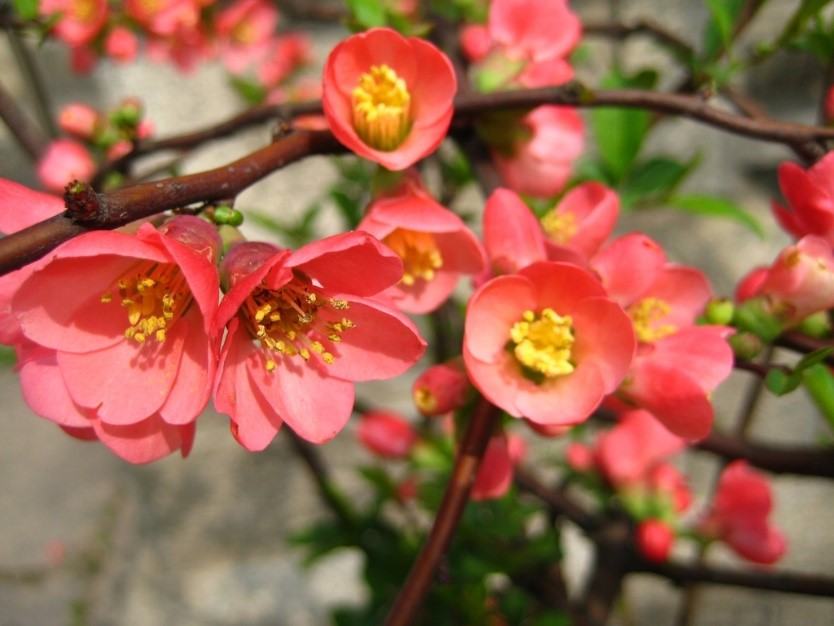
Figure 1: Flowering quince
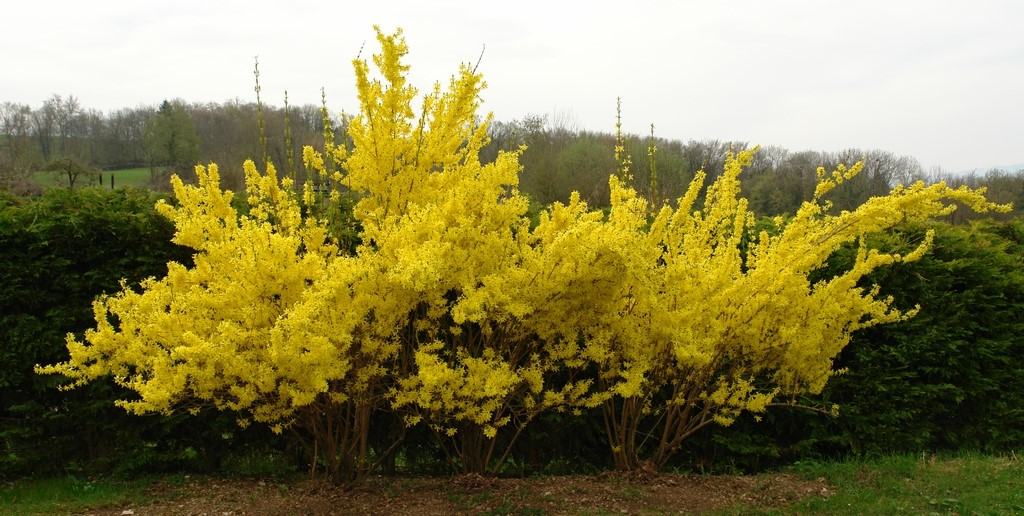
Figure 2: Forsythia (aka yellow bell bush)
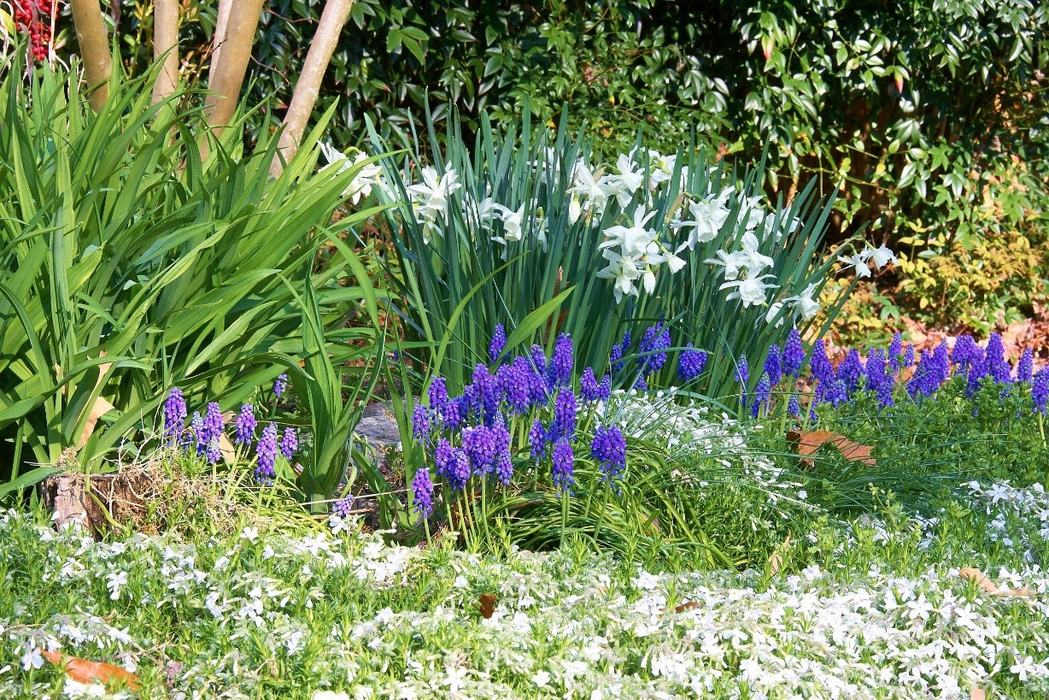
Figure 3: Grape hyacinth, daffodils, white phlox (PL 35D 008)
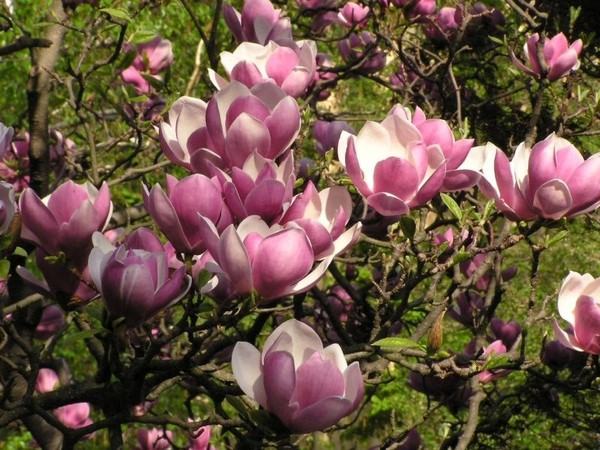
Figure 4: Saucer Magnolia
Fertilizing:
Fertilize shrubs and shade trees
Fertilize asparagus beds early this month before spear growth begins
Before planting your vegetables, fertilize your garden as recommended by your soil test results
Apply the recommended amount of lime if this was not done in the fall
Planting:
Plant a tree for Arbor Day! (March 18th)
Plant small fruit plants, grape vines and fruit trees before the buds break
Transplant or plant new trees, shrubs, and ground covers so their roots can get established before summer comes!
Plant seeds of the following perennials: columbine, hollyhock, coreopsis, daisy, phlox, and dianthus (Sweet William)
Plants of broccoli, cabbage and cauliflower should be set out in the garden in mid-March
Plant seeds of these vegetables: beets, carrots, Chinese cabbage, kale, kohlrabi, lettuce, Swiss chard, turnips, potatoes, cabbage, broccoli, and cauliflower.
Start any annual flowers or warm-season vegetables inside your home that are not commercially available in early March
Pruning:
Finish pruning fruit trees, blueberries, grapes, blackberries
Prune spring flowering plants like winter honeysuckle, flowering quince, and camellias after their flowers fade
Prune roses late in March
Shrubs like abelia, mahonia and nandina can be pruned this month if needed
Dead-head or pick off faded flowers of pansy and daffodil (they will flower longer if old flowers are removed)
Overgrown shrubs can be severely pruned (not needled evergreens)
Trim ornamental grasses like liriope, Mondo grass, and pampas grass (a weed eater will work perfect!)
Spraying:
Spray peach and nectarine trees with a fungicide to prevent leaf curl
Spray all fruit trees with dormant oil to help eliminate some insects (after pruning)
Lawn Care:
Fertilize with cool-season turf with 10-10-10, but NOT with slow-release fertilizer
Apply crabgrass preventer to your lawn to help control crabgrass in the turf
Mow tall fescue lawns as needed
Seed fescue and bluegrass if not done in September
Propagation:
Continue to divide perennials like daylily, shasta daisy, gaillardia and coreopsis
Specific Chores:
Restock on garden supplies like fertilizer, insecticides and fungicides if needed
Make sure all garden equipment, lawn mowers, tillers, hedge trimmers, tools, hoses and sprayers are ready to go for the season
Be certain that old plantings of perennials like peony, hollyhock and phlox are clean of last season’s growth